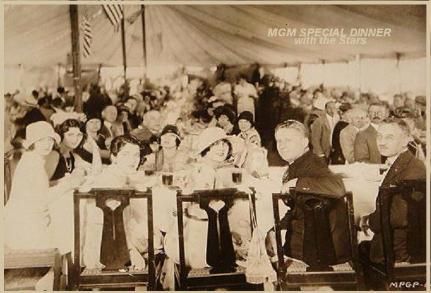
| In 1924, theater magnate Marcus Loew had bought Metro Pictures Corporation (founded in 1916) and Goldwyn Pictures (founded in 1917) to provide a steady supply of films for his large theater chain, Loews, Inc. However, these purchases created a need for someone to oversee his new Hollywood operations, since longtime assistant Nicholas Schenck was needed in New York to oversee the theaters. Loew addressed the situation by buying Mayer Pictures on April 16, 1924. Because of his decade-long success as a producer, Louis B. Mayer was made a vice-president of Loews and head of studio operations in California, with Harry Rapf and the twenty-five year old "boy wonder" Irving Thalberg as heads of production. For decades, MGM's legal name was "Loews, Inc." Originally, the new studio's films were presented in the following manner: Louis B. Mayer presents a Metro-Goldwyn picture, but Mayer soon added his name to the studio. Though Loew's Metro was the dominant partner, the new studio inherited Goldwyn's studios in Culver City, California, the former Goldwyn mascot Leo the Lion (which replaced Metro's parrot symbol), and the corporate motto Ars Gratia Artis ("Art for Art's Sake"). |

| Marcus Loew died in 1927, and control of Loews passed to his longtime associate, Nicholas Schenck. Rival mogul William Fox of Fox Film Corporation saw an opportunity to expand his empire, and in 1929, with Schenck's assent, bought the Loew family's holdings. However, Mayer and Thalberg were outraged -- despite their high posts in the company, they were not shareholders. Mayer in particular used his political connections to persuade the Justice Department to sue Fox for violating federal antitrust law. During this time, in the summer of 1929, Fox was badly hurt in an automobile accident. By the time he recovered, the stock market crash in the fall of 1929 had virtually wiped out Fox's financial holdings, ending any chance of the Loews merger going through even if the Justice Department had given its blessing. Schenck and Mayer had never gotten along -- in fact, Mayer reportedly called his boss "Mr. Skunk" in private. The abortive Fox merger only increased the animosity between them. Schenck blamed Mayer rather than the stock market crash for costing him an instant fortune. The animosity between the two men led to a heated rivalry between the New York and Hollywood sides of the company that lasted over 20 years, until Mayer's dismissal by Schenck in 1951. |
| Information from Wikipedia |